
- Home
- Sectors We Serve
- Energy
- Oil and Gas Safety and Security Systems
ENERGY ยท CRITICAL NATIONAL INFRASTRUCTURE
Oil and Gas Safety and Security Systems for Syria
Mission-critical communications and integrated safety and security systems designed for oil, gas and energy facilities in Syria. From risk assessment and architecture to deployment, secure operations, and long-term support.

Safe Operations Depend on Systems That Keep Working Under Pressure
Oil and gas facilities operate in hazardous, remote and high-consequence environments. 3S Ventures is developing a strategic capability in safety and security systems for energy infrastructure, serving operators, state energy companies and authorized government bodies.
The proposed model is purpose-built for safety and continuity: resilient communications, safety and emergency response, cybersecurity for industrial systems and integration with existing physical protection. It would be developed in partnership with relevant authorities and operators, and is subject to local licensing, regulatory approval, supplier agreements and technical validation.

Oil and Gas Safety Capabilities
Private LTE/5G & Emergency Communications
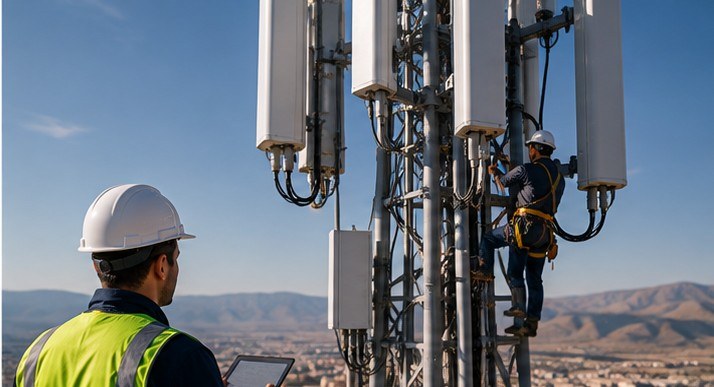
Dedicated wireless networks for energy sites: coverage engineering for plants, fields, pipelines and terminals, resilient voice, video and data for field crews, and alerting and emergency communications for hazardous areas where validated and supported by the selected equipment.
HSE & Emergency Response Systems
Health, safety and environment monitoring, integration of industrial gas detection, gas-leak and fire detection, alarm management and incident coordination, connected to operations rooms and emergency response teams.
Industrial Cybersecurity (OT and SCADA Security)
Oil and gas cyber security: assessment and protection of control systems and plant networks: asset visibility, network segmentation, secure remote access, monitoring and incident-response planning, informed by recognized industrial cybersecurity standards.
Integrated Protection & Lifecycle Support
Integration with existing access control, perimeter detection and monitoring systems into one command-center picture, plus centralized monitoring, maintenance, upgrades and operational readiness planning.
Operational environments
Safety, security, monitoring and communications needs differ by facility type. A private LTE network can carry communications, monitoring and emergency calls across a site. This is how we would approach each environment.
Upstream facilities
- Safety: gas and fire detection and emergency communications
- Security: perimeter and access control, surveillance
- Communications: private LTE/5G with backup links
Pipelines and remote assets
- Safety: pipeline leak detection and pressure alarms relayed reliably
- Security: pipeline security, with intrusion detection and patrol support along routes
- Communications: microwave and satellite links for remote sections
Refineries and processing plants
- Safety: integration with the plant's own safety systems, kept separate from control
- Security: zone-based protection and access control
- Cyber and OT: segmentation and monitoring of control networks
Storage terminals and distribution
- Safety: loading-area hazards and emergency response
- Security: gate, vehicle and surveillance systems
- Communications: reliable site-wide and field communications
3S Ventures proposes to design, integrate and support these systems. Specialist equipment and services would be delivered with qualified partners chosen for each facility. No manufacturer partnership is claimed, and no system guarantees regulatory compliance on its own.
Safety-First Design. Layered Security. Operational Continuity.
- Designed for hazardous, remote and high-consequence sites
- Brings communications, cyber, physical and safety systems into one operating picture
- Defined governance and operational accountability
- Phased rollout from a pilot facility to multi-site deployment
Built for Operators Who Cannot Afford Blind Spots
- Oil and gas operators
- State energy and petroleum companies
- Gas processing and power facilities
- Pipelines, terminals and storage
- Refineries and industrial energy sites
- Authorized government energy and emergency authorities
Explore Syria by province โ ยท Syria oil and gas deals 2025-2026 โ
Our Implementation Journey
Assess & Prioritize
Risk, safety and security assessment, asset inventory, licensing and regulatory review, and operating requirements.
Design & Pilot
Design an architecture spanning communications, safety and cybersecurity, integrated with existing physical protection, and validate it at a pilot facility.
Deploy & Integrate
Install and commission systems, integrate with operations and emergency response, and verify against measured acceptance criteria.
Operate & Improve
Monitor the systems, manage incidents, maintain equipment, train teams and implement lifecycle upgrades.
Built for 2027 and Beyond
Requirements, standards and technology keep moving. These systems are designed to be adapted over time, not replaced, and every capability depends on the selected equipment, licensing and technical validation.
Standards-Ready Architecture
Designed to support evolving 3GPP mission-critical and 5G-Advanced capabilities, so networks can be upgraded without being rebuilt.
Resilient Backup Paths
Optional satellite connectivity as a backup path for remote sites beyond terrestrial reach, where licensed and supported through partners.
Safety & Security Frameworks
Planning for certified hazardous-area equipment where sites require it, and OT security informed by IEC 62443, NIST CSF 2.0 and API 1164. These are design references, not certification claims.
Phased Modernization
Planned upgrades to software, radios and security controls over the lifecycle, so systems stay current as requirements change.
Solution Packages Tailored to Your Site
Every engagement starts with a requirements assessment. The scope below is a starting point and is adjusted to your sites, risks, regulations and budget.
Pilot Facility
A single facility to validate the architecture, integrations, procedures and recovery plans before wider investment.
Multi-Site Operations
Coverage, safety and security integration across several plants, fields or pipeline sections, managed from one operating picture.
Regional Program
A shared core, governance and operations model across many facilities, operators or authorities, rolled out in phases.
Technology Architecture
How the main elements of an integrated communications, cybersecurity, physical protection and safety system connect, from the facility to the control room.
OPERATIONAL TECHNOLOGY BOUNDARY
Designed to keep safety-critical systems separated from corporate and public networks
- FACILITYPlants, Pipelines & CrewsPhysical: Plants, pipelines, terminals, field crewsLogical: Process and safety signals
- SITE NETWORKPrivate Radio & Site NetworkPhysical: Towers, radios, industrial switchesLogical: Private LTE/5G cells Network segmentation
- TRANSPORTResilient BackhaulPhysical: Microwave links Fiber routesLogical: Protected transport Redundant routing
- PLATFORMSSecurity & Safety PlatformsPhysical: Redundant data or control hubLogical: Cyber monitoring, access control, alarm management
- CONTROL ROOMControl & Emergency ResponsePhysical: Control room, emergency centerLogical: Unified operating picture, incident coordination
Conceptual architecture for illustration, not a final engineering specification. Safety-critical functions remain under certified safety systems and operator procedures; this architecture would complement, not replace, them.
Technical FAQ
How would a safety and security system be deployed at a facility?
Deployment is phased. It starts with a risk, safety and security assessment and an inventory of assets, followed by a pilot at a single facility to validate the architecture, integrations and procedures. Systems are then commissioned against measured acceptance criteria and extended to further sites. Timing depends on the operator, licensing, suppliers and site access.
What licensing and compliance considerations apply?
Wireless spectrum, equipment, import and operation of security systems are regulated by the relevant national authorities. Export controls and sanctions rules also apply to equipment and services, and they change over time. Any project would depend on the applicable licenses, approvals and a compliance review by the parties involved; none is assumed here.
How is industrial control system (OT/SCADA) security approached?
The approach covers asset visibility, network segmentation, secure remote access, monitoring and incident-response planning, informed by recognized industrial cybersecurity standards. No security outcome is guaranteed, and any change to control systems follows the operator's change-management procedures.
Does this replace existing safety instrumented systems?
No. These systems are intended to complement certified safety instrumented systems, plant safety controls and operator procedures, not to replace them. Safety-critical functions remain under the operator's certified systems.
How are redundancy and resilience addressed?
Redundancy is a design principle: protected microwave and fiber transport with alternate paths, redundant platforms, and backup power at sites and facilities. Recovery procedures are defined and tested during the pilot phase, and resilience targets are agreed and validated with the operator. No uptime figure is promised here.
How are the systems maintained over their lifecycle?
Lifecycle support covers centralized monitoring, fault escalation, preventive and field maintenance, software and hardware upgrades, team training and operational readiness planning, so the systems can be updated over time.
Sources & References
Third-party sources behind the facts on this page, as reported on the dates shown. Listing a source does not imply any affiliation, and readers should verify current details.
- Enab BaladiSyrian government plans to double gas production in 2026 (January 2026)
- Enab BaladiMinistry of Energy signs agreement with Jordan to supply gas to Syria (January 2026)
- EnterpriseSaudi firms sign agreements to boost Syrian gas production (December 2025)
- Hurriyet Daily NewsSyria signs gas sector contract with a US energy company (2026)
- Industrial InfoUCC-led consortium signs a US$7 billion deal to rebuild Syria's power sector
- Open Security ArchitectureAPI Standard 1164: pipeline control systems cybersecurity, 3rd edition
- Celona (vendor case study)Private 5G with satellite backhaul at a remote drilling site; vendor-authored, self-reported results
Let's Build Safer, More Resilient Energy Infrastructure
3S Ventures welcomes engagement with energy operators, state energy companies, public authorities, specialized equipment manufacturers and engineering partners exploring integrated safety and security systems.
- Energy operators
- Government and state energy bodies
- Technology and equipment partners
Prefer to reach us another way? Visit our Contact page
Capabilities shown describe a proposed strategic service offering. Deployment and operation depend on applicable licenses, regulatory approvals, export and sanctions compliance, supplier agreements, system integration and technical validation. These systems are intended to complement, not replace, certified safety instrumented systems and operator safety procedures. 3S Ventures is not represented as affiliated with any equipment manufacturer or energy operator.