- Home
- Sectors We Serve
- Telecommunications
- Public Safety Networks
TELECOMMUNICATIONS · CRITICAL NATIONAL INFRASTRUCTURE
Independent Public Safety Broadband Networks for Syria
Purpose-built LTE/5G communications infrastructure for emergency response agencies and essential public services in Syria. From feasibility and dedicated network architecture to deployment, secure operations, and long-term support.
Executive overview
- What it is: A dedicated, independent public safety LTE/5G network that carries mission-critical communications and emergency communications for police, fire and rescue, emergency medical services, civil defense and other authorized agencies. It forms part of a country's critical communications infrastructure.
- Who it is for: Government ministries and emergency agencies. Funders and technology suppliers also use this page to understand the proposal.
- How it would be delivered: As a service: a strategic partner finances the network, 3S Ventures develops, integrates and operates it, and the government pays service fees under a long-term contract.
- Status: A proposed offering. Nothing has been built, no spectrum has been requested or assigned, and all figures are planning assumptions.
Read the implementation guide or learn how a national network is built.

Public safety broadband delivered as a service
For government agencies, the network would be offered as a managed service: a strategic partner would finance a dedicated, independent network, 3S Ventures would develop, integrate and operate it, and the government would buy the service under a long-term agreement with defined service levels. It is a proposed offering for government customers, not a consumer or commercial mobile service. The implementation plan explains how it would be delivered.
Communications That Remain Essential When Everything Else Is Under Pressure
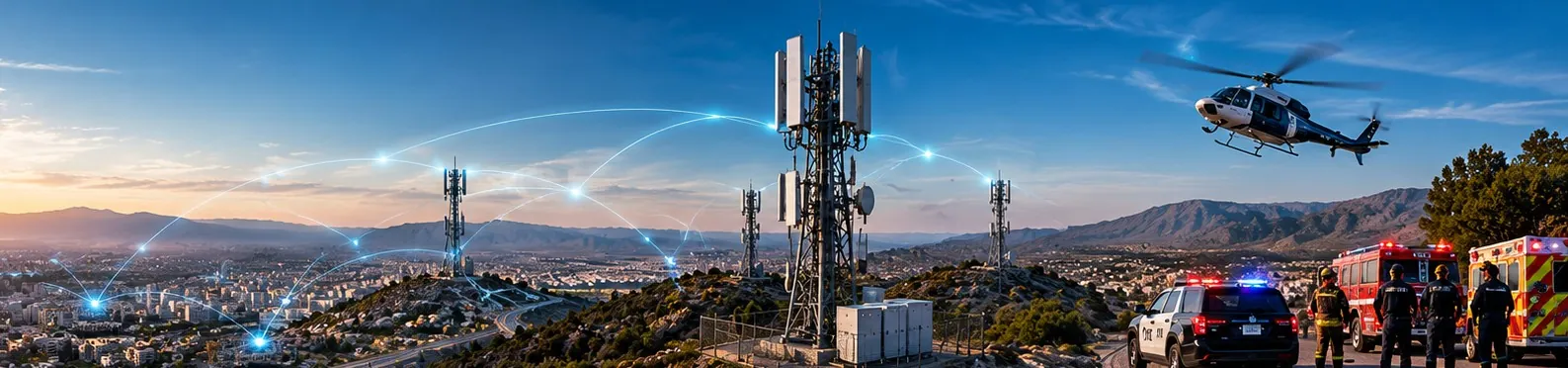
Reliable communications are fundamental to emergency coordination. 3S Ventures is developing a strategic capability focused on independent public safety broadband infrastructure in Syria that can serve police, fire and rescue, emergency medical services, civil defense, and authorized government response agencies.
The proposed model is purpose-built for mission-critical requirements: secure access, resilient connectivity, coordinated dispatch, priority services, and a long-term operational framework. Networks would be developed in partnership with relevant authorities and subject to local spectrum licensing, regulatory approval, and formal reliability testing.

Public Safety LTE and 5G Network Capabilities
Dedicated LTE/5G Radio Infrastructure
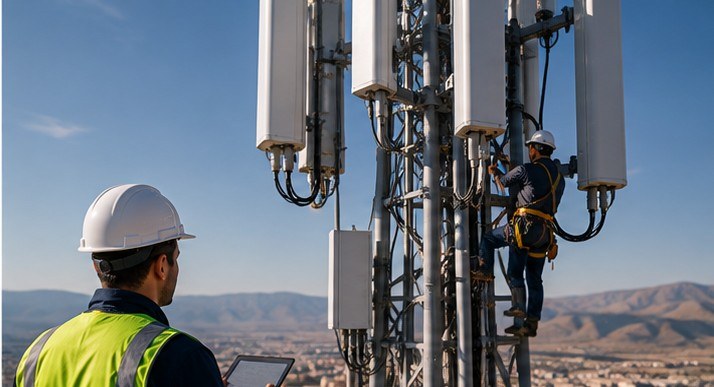
New cellular sites, towers, radio access equipment, RF planning, licensed spectrum coordination, and coverage engineering designed for public safety users rather than general commercial subscribers.
Mission-Critical Voice, Video & Data
Support for interoperable field communications, dispatch connectivity, secure broadband applications, and standards-based mission-critical service capabilities where validated and supported by the selected equipment.
Resilient Core, Backhaul & Power
Dedicated packet core, identity and subscriber control, protected transport links, redundant data-center design, backup energy systems, and outage-recovery planning.
Network Operations & Lifecycle Support
Centralized service assurance, performance monitoring, field maintenance, fault escalation, preventive maintenance, upgrades, and operational readiness planning.
Independent Infrastructure. Public Mission. Long-Term Reliability.
- Purpose-built for authorized public safety users
- Designed as a standalone network, not dependent on a commercial mobile operator's radio coverage
- Secure network governance and defined operational accountability
- Phased rollout from pilot areas to regional and national service
Built for Agencies That Cannot Afford to Lose Contact
- Police and law enforcement
- Fire and rescue
- Emergency medical services
- Civil defense and disaster management
- National and regional emergency operations centers
- Other authorized essential public-service agencies
Read the implementation plan for a Syria first responder network → · How a national network is built →
Our Implementation Journey
Assess & Authorize
Establish use cases, licensing, spectrum, feasibility, terrain analysis, interoperability and operating requirements.
Engineer & Pilot
Design the end-to-end architecture and validate an initial cluster of sites, field devices, dispatch workflows and recovery procedures.
Build & Scale
Construct infrastructure, connect transport networks, commission systems and expand coverage against measured acceptance criteria.
Operate & Evolve
Monitor the network, manage incidents, maintain equipment, train teams and implement lifecycle modernization.
Built for 2027 and Beyond
Requirements, standards and technology keep moving. These networks are designed to be adapted over time, not replaced, and every capability depends on the selected equipment, licensing and technical validation.
Standards-Ready Architecture
Designed to support evolving 3GPP mission-critical and 5G-Advanced capabilities, so networks can be upgraded without being rebuilt.
Resilient Backup Paths
Optional satellite connectivity as a backup path for areas beyond terrestrial reach, where licensed and supported through partners.
Interworking by Choice
Planning for interworking with existing land-mobile-radio systems where an agency wants it. Whether to interwork with or replace them is each agency's decision after technical validation.
Phased Modernization
Planned upgrades to software, radios and security controls over the lifecycle, so the network stays current as requirements change.
Solution Packages Tailored to Your Agency
Every engagement starts with a requirements assessment. The scope below is a starting point and is adjusted to your users, terrain, spectrum, regulations and budget.
Pilot Cluster
An initial cluster of sites to validate the architecture, field devices, dispatch workflows and recovery procedures.
Regional Network
Coverage and dispatch integration across a governorate or region, managed from a central operations center.
National Program
A shared core, governance and operations model across agencies and regions, rolled out in phases.
Pilot, regional and national options compared
| Option | Scope (planning assumption) | Purpose | Decision gate |
|---|---|---|---|
| Pilot cluster | About 50 sites in one region | Prove coverage, priority and operations with real agencies | Acceptance tests passed |
| Regional network | About 700 further sites across several regions | Extend to more agencies and transport corridors | Funding secured and approvals confirmed |
| National program | About 1,350 further sites, about 2,100 in total | Nationwide coverage and steady operations | Each wave approved at a gate |
Site counts and costs are planning assumptions from our implementation guide. They are not quotations.
Technology Architecture
How the main elements of a dedicated, standalone public safety broadband network connect, from responders in the field to the operations center.
INDEPENDENT PUBLIC SAFETY NETWORK BOUNDARY
Standalone network, not dependent on a commercial mobile operator's radio coverage
- FIELD USERSAuthorized RespondersPhysical: Handheld devices, vehicle routersLogical: User identities and groups
- RADIO ACCESSDedicated Towers & RadioPhysical: Towers, site shelters Antennas, radio unitsLogical: LTE/5G cells Licensed spectrum plan
- TRANSPORTResilient BackhaulPhysical: Microwave links Fiber routesLogical: Protected transport Redundant routing
- CORESecure Cellular CorePhysical: Redundant data centersLogical: Dedicated packet core Identity, subscriber, policy control
- OPERATIONSDispatch & Network OpsPhysical: Dispatch consoles Operations centerLogical: Emergency applications Service assurance
Conceptual architecture for illustration, not a final engineering specification. Priority and pre-emption must be supported end-to-end across the radio network, core and user devices; a dedicated core alone does not provide them.
Technical FAQ
How would a network be deployed?
Deployment is phased. It starts with an assessment of use cases, spectrum, terrain and interoperability needs, followed by a pilot cluster of sites that validates the architecture, field devices, dispatch workflows and recovery procedures. Coverage is then built out against measured acceptance criteria. Timing and scope depend on the participating authorities, funding, licensing and supplier agreements.
How does spectrum licensing work?
Spectrum is allocated by the national regulator and the relevant authorities, and 3S Ventures does not claim to hold any spectrum. Any network would be planned around spectrum that is assigned or authorized for public safety use, and could not be built or operated without the applicable licenses and regulatory approvals.
Can the network expand to national coverage?
The model is designed for phased growth from pilot areas to regional and then national service. Expansion would be planned site by site and verified through coverage testing. No coverage level is guaranteed, and national scale depends on authorization, funding, spectrum and the agencies that choose to participate.
How is network redundancy achieved?
Redundancy is a design principle across the network: protected microwave and fiber transport with alternate paths, redundant data-center and core design, and backup energy systems at sites and facilities. Recovery procedures are defined and tested during the pilot phase. Resilience targets would be set and formally validated with the authorities; no uptime figure is promised here.
How are priority communications handled?
Priority, quality of service and pre-emption must be supported end-to-end: in the radio network, the core and the user devices. A dedicated core alone does not provide them. Mission-critical voice, video and data capabilities would be enabled only where the selected equipment supports and has validated them. Interworking with, or replacement of, existing land-mobile-radio systems is a decision for each agency after technical validation.
How is the network maintained over its lifecycle?
Lifecycle support covers centralized service assurance, performance monitoring, fault escalation, field and preventive maintenance, software and hardware upgrades, team training and operational readiness planning, so the network can be modernized over time.
Sources & References
Third-party sources behind the facts on this page, as reported on the dates shown. Listing a source does not imply any affiliation, and readers should verify current details.
- TelecomLeadZain wins Syria's second mobile license; commercial launch targeted for Q1 2027 (2026)
- Telecom Review Middle EastSyria opens international bidding for a 20-year mobile network license (2026)
- Enab BaladiMinister: full telecom coverage in Syria needs about three years (September 2026)
- Enab BaladiSyria Civil Defence merges with the Ministry of Emergency and Disaster Management (June 2025)
- Light ReadingContract for a national TETRA wireless network (2008)
- UN humanitarian response prioritiesEmergency telecommunications in Syria (2025)
- 3GPPMission-critical standardization update (2025)
- PubMed CentralMission-critical services in 4G/5G and beyond: standardization and future perspectives
Let's Build Resilient Public Safety Communications Infrastructure
3S Ventures welcomes engagement with public authorities, specialized network equipment manufacturers, engineering partners, and institutions exploring sovereign emergency broadband systems.
- Government agencies
- Technology and equipment partners
- Infrastructure stakeholders
Prefer to reach us another way? Visit our Contact page
Capabilities shown describe a proposed strategic service offering. Network deployment and operation depend on applicable licenses, regulatory approvals, supplier agreements, system integration and technical validation. 3S Ventures is not represented as affiliated with any existing national public safety network or carrier.